HomeBlog FM LogisticTriangular trade: the system that shaped the history of international trade
Supply Chain Performance
On February 10, 2026
Triangular trade: the system that shaped the history of international trade
Triangular trade was a historical trading system that connected Europe, Africa, and the Americas via sea routes that formed a continuous cycle of exchange. This model not only…
Share
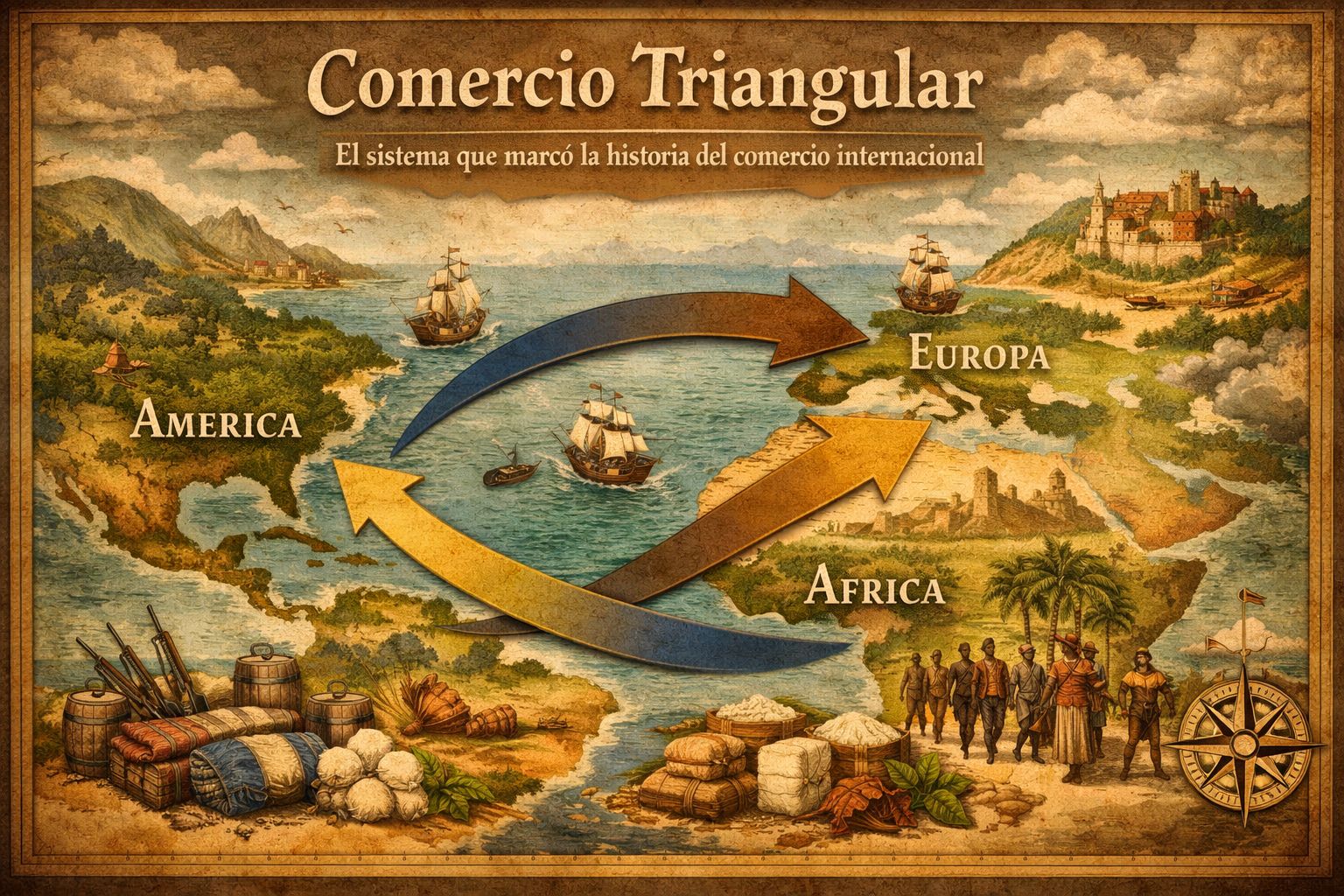
Triangular trade was a historical trading system that connected Europe, Africa, and the Americas via sea routes that formed a continuous cycle of exchange. This model not only transformed the global economy of its time, but also laid many of the foundations on which international trade is structured today.
Understanding how triangular trade worked helps us understand why certain sea routes, strategic ports, and flows of goods remain key to global trade today. Although the context is completely different today, the logic of connecting regions with different productive advantages is still present in modern logistics.
Is there anything similar to triangular trade today?
Today, the term “triangular trade” may occasionally appear in the field of international trade, but there is no real equivalent to the historical system. Today, we sometimes talk about triangular operations when three different countries are involved in a transaction (for example, a seller, an intermediary, and a final buyer in different territories).
However, these modern operations bear no relation to the historical model. Classic triangular trade was based on a structured cycle, sustained for centuries, and deeply linked to colonialism and slavery, something that bears no comparison to current commercial practices.
Triangular trade: why it changed history
For several centuries, triangular trade permanently connected three continents and had an enormous economic impact on the European powers. This system enabled unprecedented growth in maritime trade and capital accumulation in Europe.
But it also had profound human consequences, especially for Africa and the Americas, due to the transatlantic slave trade. The triangular trade was not only an economic phenomenon, but also a system that left a lasting mark on the social, demographic, and political structures of many territories.
An exchange system that connected three worlds
Each region contributed different products within this cycle:
Europe supplied manufactured goods.
Africa became the forced point of departure for millions of enslaved people.
America produced agricultural raw materials that were in high demand in Europe.
These routes formed a continuous trade circuit that mainly benefited the European powers, which controlled both maritime transport and most of the strategic ports.
This is how triangular trade worked (in three stages)
The model was organized into three major stages that completed a commercial cycle:
First movement: Europe → Africa
Ships loaded with manufactured goods such as textiles, weapons, tools, and other goods departed from European ports. These goods were exchanged in African ports for people who were captured and sold as slaves.
This first section reflected Europe’s role as an industrial and commercial center, capable of producing goods with high exchange value.
Second movement: Africa → America
This leg of the journey, known as the Atlantic crossing, was the cruelest part of the system. Millions of enslaved people were transported in inhumane conditions to the Americas to work on plantations and in mines.
The economic objective was clear: to provide forced labor to exploit the natural and agricultural resources of the American continent, especially in the Caribbean, Brazil, and North America.
Third movement: America → Europe
From America, ships returned to Europe loaded with raw materials such as sugar, cotton, tobacco, coffee, and cocoa. These products fueled European industry and the growing consumption of its populations.
This is where the importance of ports and maritime routes becomes evident, an aspect that remains key today in port logistics and the organization of international trade.
What goods traveled along these routes, and why were they so valuable?
Each stage of triangular trade was dominated by strategic commodities:
Europe → Africa: textiles, weapons, alcohol, tools.
Africa → America: enslaved people (the basis of the colonial production system).
America → Europe: sugar, cotton, tobacco, coffee, cocoa, and precious metals.
These products were highly valuable because they met strong demand in European markets and generated huge profit margins. Sugar and cotton, for example, were key to the development of entire industries in Europe.
Why did this model emerge, and what made it so profitable?
Triangular trade emerged due to a combination of several factors:
European colonial expansion.
High demand for tropical raw materials.
The development of maritime navigation.
The need for cheap labor for plantations.
This model was profitable because it closed a cycle with almost no “empty” trips. Each leg generated revenue, optimizing the use of ships and reducing logistics costs, which remains a basic principle of modern transportation.
The legacy of triangular trade in modern logistics and commerce
Although triangular trade is a thing of the past, its influence is still present in many aspects of today’s trade. It contributed to:
The consolidation of major maritime routes.
The development of strategic ports.
Regional specialization in certain products.
The creation of intercontinental trade networks.
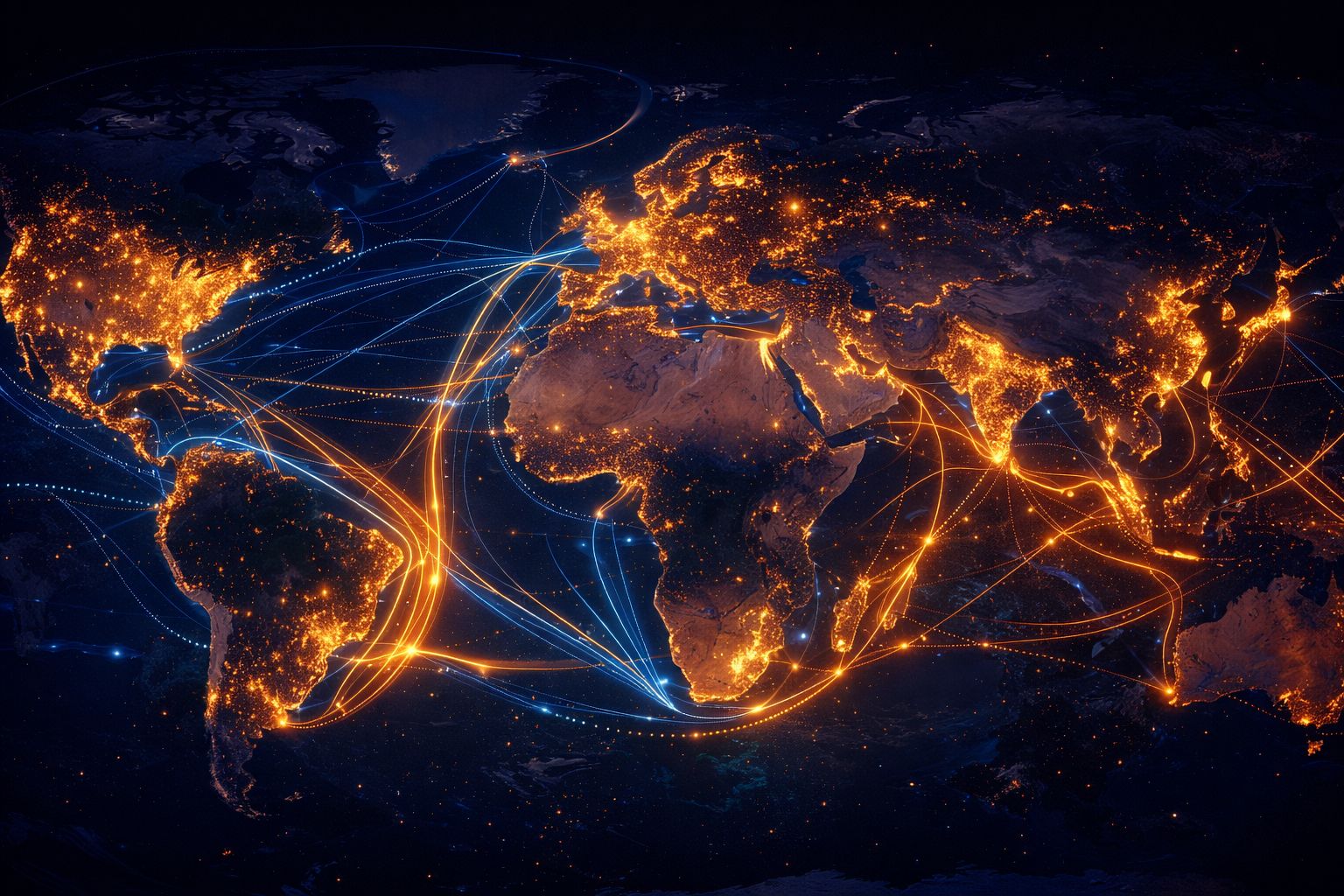
Today, these dynamics have evolved into more complex models, such as intermodal transport, which combines different modes of transport to optimize time and costs.
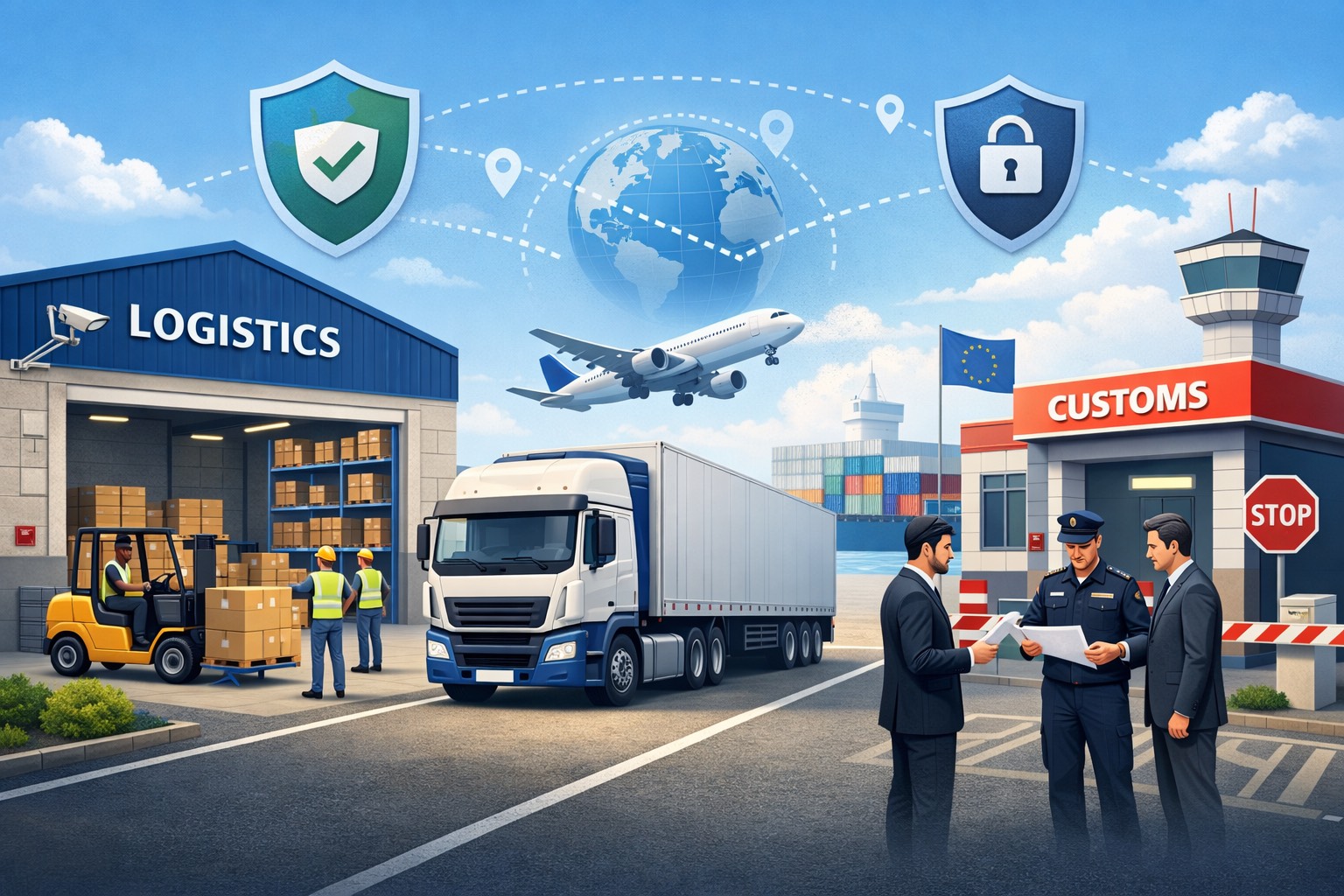
In addition, modern logistics has incorporated advanced product traceability systems, which allow for greater control of supply chains, something unthinkable in the era of triangular trade.
On current routes between America and Europe, cargo ports remain key hubs for international trade.
Understanding triangular trade is key to understanding the evolution of global trade and the configuration of many of today’s maritime routes. Although it is a system of the past, its impact is still present in logistics, ports, and modern trade dynamics.
Exploring its history provides a more complete picture of how international trade has been built and how it has evolved toward more efficient, regulated, and technologically advanced models.
To learn more about the historical context, you can consult these external references: